




Knowledge About Threading Taps
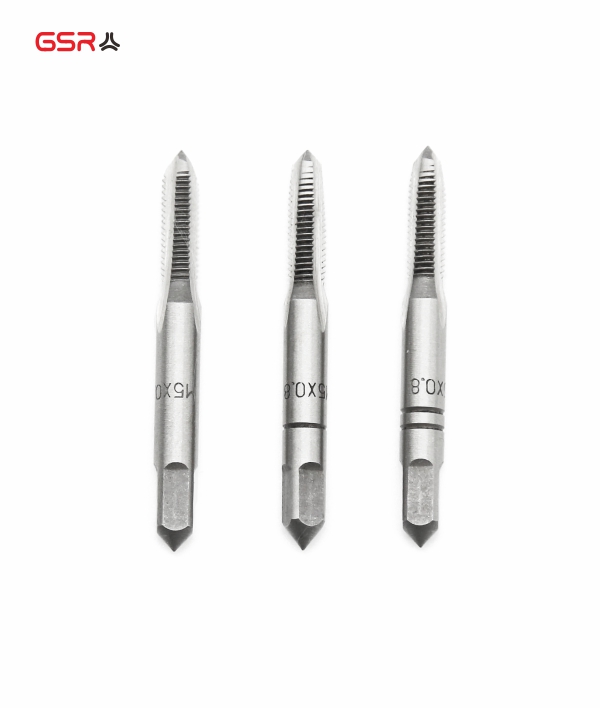
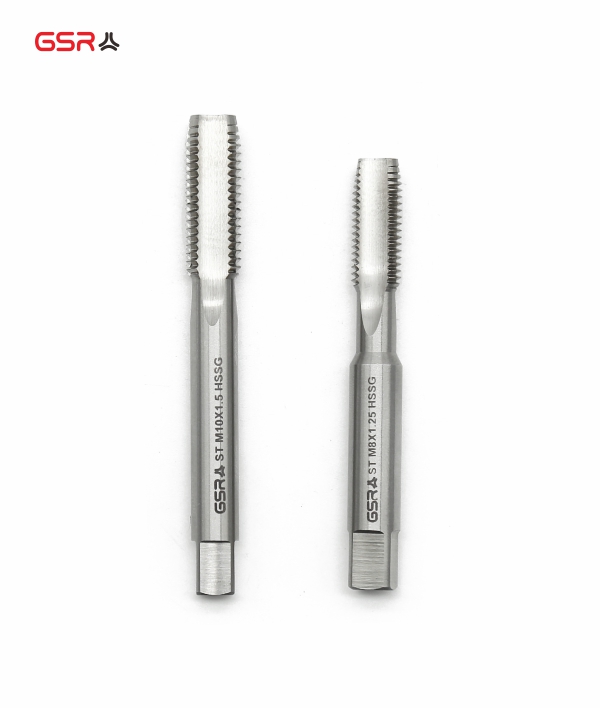
A tap is a common tool used for cutting internal threads. It can be categorized by shape into spiral flute taps, spiral point taps, straight flute taps, and pipe thread taps. Based on usage, they can be classified as hand taps or machine taps. By specification, they include metric, imperial (UNC/UNF), and British standard (BSW/BSF) taps. Are you familiar with all of them?
1. Classification of Taps
(1) Cutting Taps
1. Straight Flute Taps:
Used for through holes and blind holes.
Chips accumulate in the flutes, resulting in lower thread quality.
More suitable for short-chip materials like gray cast iron.
2. Spiral Flute Taps:
Used for blind holes with depth ≤ 3D.
Chips are evacuated along the spiral flutes, providing high thread surface quality.
10°–20° helix angle: Suitable for thread depth ≤ 2D.
28°–40° helix angle: Suitable for thread depth ≤ 3D.
50° helix angle: Suitable for thread depth ≤ 3.5D (up to 4D in special cases).
Note: In some cases (hard materials, large pitch, etc.), spiral flute taps may be used for through holes to enhance tooth tip strength.
3. Spiral Point (Gun) Taps:
Only for through holes, with a length-to-diameter ratio of 3D–3.5D.
Chips are pushed forward, reducing cutting torque and improving thread surface quality.
Also known as spiral point taps or gun taps.
Warning: Ensure full penetration during cutting to avoid chipping.
(2) Forming (Roll) Taps
Used for both through and blind holes.
Forms threads through plastic deformation (only works with ductile materials).
Advantages:
1. Utilizes workpiece plastic deformation.
2. Larger cross-section provides higher strength and resistance to breakage.
3. Higher cutting speeds and productivity compared to cutting taps.
4. Cold-forming improves mechanical properties, surface finish, strength, wear resistance, and corrosion resistance.
5. No chip generation.
Disadvantages:
1. Limited to ductile materials.
2. Higher manufacturing cost.
Two structural types:
1. Non-oil groove forming taps: Only for vertical blind holes.
2. Oil groove forming taps: Suitable for all conditions, but small-diameter taps often omit oil grooves due to manufacturing difficulty.
2. Structural Parameters of Taps
(1) External Dimensions
1. Overall length: Special extended versions may be required.
2. Flute length: Similar considerations apply.
3. Shank square: Common standards include DIN (371/374/376), ANSI, JIS, and ISO. Ensure compatibility with the tap holder.
(2) Thread Section
1. Accuracy: Determined by thread standards (e.g., ISO 1/2/3 corresponds to H1/2/3 in Chinese standards). Note manufacturer-specific tolerances.
2. Cutting taper: The cutting portion of the tap. Longer tapers generally increase tool life.
3. Thread chamfer (correction teeth): Provides stability, especially in unstable conditions. More chamfer teeth increase resistance.
(3) Flute Design
1. Flute profile: Affects chip formation and evacuation (often proprietary).
2. Rake & clearance angles: Higher angles reduce cutting resistance but decrease tooth strength.
3. Number of flutes: More flutes increase tool life but reduce chip space.
3. Tap Materials and Coatings
(1) Materials
1. Tool steel: Rarely used today, mainly for hand taps.
2. Cobalt-free HSS (e.g., M2, M3): Marked as HSS.
3. Cobalt HSS (e.g., M35, M42): Marked as HSS-E.
4. Powder metallurgy HSS: Superior performance, marked as HSS-E-PM.
5. Carbide: Used for straight flute taps in short-chip materials (e.g., cast iron, high-silicon aluminum).
Note: Leading manufacturers develop proprietary alloys due to cobalt supply issues.
(2) Coatings
1. Steam oxidation: Enhances coolant adhesion and reduces friction (for soft steel).
2. Nitriding: Surface hardening for abrasive materials (cast iron/aluminum).
3. Steam + nitriding: Combines both benefits.
4. TiN (gold): General-purpose, good hardness and adhesion.
5. TiCN (blue-gray): 3000HV hardness, heat-resistant to 400°C.
6. TiN+TiCN (dark yellow): Balanced performance.
7. TiAlN (blue-gray): 3300HV, 900°C heat resistance (high-speed machining).
8. CrN (silver-gray): Superior lubrication for non-ferrous metals.
Note: Most coatings are proprietary formulations.
4. Key Factors in Tapping
(1) Equipment
1. Machine: Vertical setups outperform horizontal ones (ensure coolant coverage in horizontal).
2. Tap holder:
Use synchronous holders for rigid setups.
Flexible holders (axial/radial compensation) for unstable conditions.
Square drives preferred (except for taps < M8).
3. Coolant: Lubrication > cooling (emulsion concentration ≥10% recommended).
(2) Workpiece
1. Material/hardness: Avoid tapping materials > HRC 42.
2. Pilot hole: Size accuracy and wall finish are critical.
(3) Parameters
1. Speed: Adjust based on tap type, material, and machine conditions. Reduce speed for:
Poor rigidity/excessive runout.
Inconsistent material hardness (e.g., welds).
Extended taps or adapters.
Horizontal machining with external coolant.
Manual operations (e.g., drill presses).
2. Feed:
Rigid tapping: Feed = 1 × pitch/rev.
Flexible tapping: Feed = (0.95–0.98) × pitch/rev.
5. Tap Selection Guidelines
(1) Tolerance Grades
Selection depends on:
1. Workpiece material/hardness.
2. Equipment (machine, holder, coolant).
3. Tap accuracy/manufacturing variance.
Example: For 6H threads in steel, use 6H taps; for cast iron, 6HX taps improve life.
Japanese Tap Standards:
OSG cutting taps use OH grades (0.02mm increments from lower limit).
OSG forming taps use RH grades (0.0127mm increments).
Note: ISO 6H ≠ OH3/OH4—conversion required.
(2) External Dimensions
1. Common standards: DIN, ANSI, ISO, JIS.
2. Select length/flute/shank based on application.
3. Avoid interference during machining.
(3) Six Key Selection Factors
1. Thread type (metric, imperial, etc.).
2. Hole type (through/blind).
3. Workpiece material/hardness.
4. Thread depth/pilot hole depth.
5. Thread accuracy requirements.
6. Tap standard (specify special requirements).
Contact us for more details: SALES@GSRTHREADS.COM
Previous: Solution For Tapping On Titanium Alloys