




Fine vs Coarse Threads
Fine vs Coarse Threads – Which One to Choose?
When you see designations like M10 or M10×1.25 on technical drawings, it’s not just a technicality. The difference between coarse and fine threads affects assembly speed, adjustment precision, vibration resistance, and suitability for different materials or wall thicknesses. Both are standardized in the metric ISO system, sharing the same 60° flank angle – but their pitch sets them apart.
What Does “Pitch” Mean?
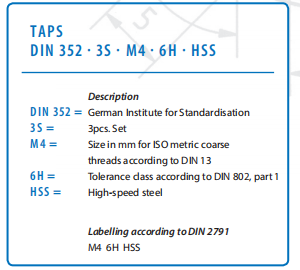
Pitch is the axial distance between two adjacent thread crests. It tells you how far a screw advances with one full turn.
· M10×1.5 (coarse) moves 1.5 mm per revolution.
· M10×1.0 (fine) moves only 1.0 mm per revolution – slower, but more precise.
For inch threads, pitch is expressed as TPI (threads per inch). Higher TPI = finer thread. To convert: pitch (mm) = 25.4 ÷ TPI. For example, 20 TPI gives 1.27 mm pitch; 10 TPI gives 2.54 mm – clearly coarser.
Coarse Thread – The Default Standard
In the metric ISO system, the coarse thread is the default. Its pitch is fixed for each nominal diameter – e.g., M10 always means 1.5 mm pitch (per DIN 13-1). No extra notation is needed; drawings simply state “M8” or “M12”, and everyone knows the pitch. This simplicity makes coarse threads the go-to for general engineering.
Fine Thread – When Precision Matters
A fine thread has a smaller pitch than its coarse counterpart with the same outer diameter. That’s why the pitch must be explicitly stated, e.g., M10×1.25. More threads per unit length result in a larger core diameter (hence greater load-bearing cross-section) and a smaller helix angle. This yields two benefits:
· Higher self-locking – less prone to loosening under vibration.
· Finer adjustability – ideal for set screws and precision mechanisms.
Practical Differences – Where Each Excels
Here is a quick comparison of key performance aspects:
· Assembly speed – Coarse threads allow faster tightening due to the larger lead; fine threads require more turns, slowing assembly.
· Adjustment accuracy – Fine threads provide finer incremental movement, making them suitable for precise settings; coarse threads are less precise.
· Vibration resistance – Fine threads have higher self-locking, making them better for dynamic loads; coarse threads are more likely to loosen over time.
· Damage tolerance – Coarse threads are less sensitive to dirt, burrs, and minor damage; fine threads are more delicate and require cleaner conditions.
· Material suitability – Coarse threads work well in soft or brittle materials (e.g., aluminium, cast iron); fine threads are preferred for hard materials and thin-walled components.
· Load-bearing section – For the same nominal diameter, fine threads have a larger core diameter, offering greater tensile and shear strength.
When to Use Fine Thread?
· Precision adjustments – small incremental movements (e.g., set screws, tuning mechanisms).
· Thin-walled components – limited material thickness, where a coarse thread might weaken the part.
· High-strength connections – maximise the solid cross-section to carry higher loads.
· Hydraulic systems – compact, leak-proof joints that benefit from fine pitch.
· Vibration-prone environments – e.g., engines, rotating machinery, where self-locking is critical.
When to Stick with Coarse Thread?
· Everyday bolted joints – no special fine-tuning needed.
· Fast assembly – housings, covers, brackets that require quick tightening.
· Soft or brittle materials – reduces the risk of stripping or cracking.
· Outdoor or dirty conditions – less risk of seizure due to contamination.
· Repairs and maintenance – standard sizes are widely available and easy to replace.
Choosing the Right Tap – Don’t Guess
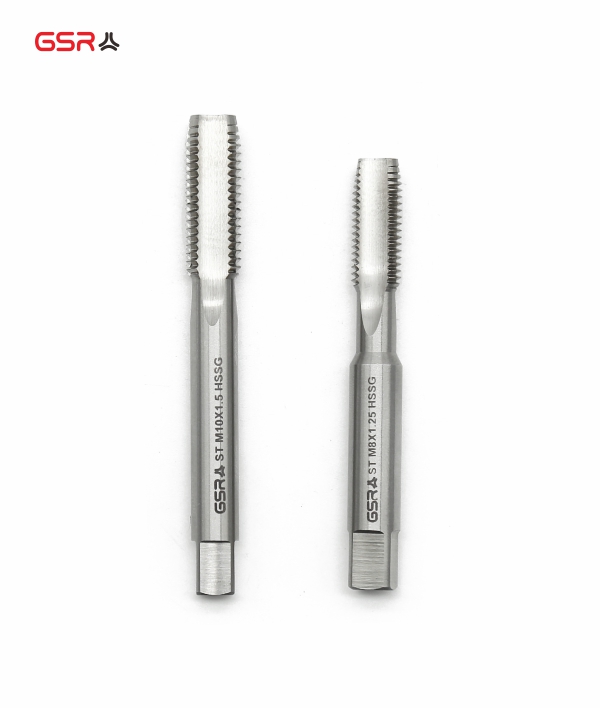
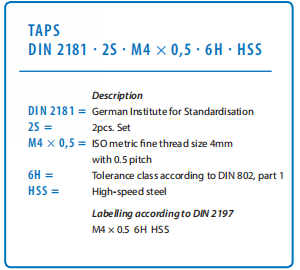
In practice, selecting a tap solely by nominal diameter (e.g., M10) is insufficient. You must know whether it’s coarse or fine, because the pitch determines the correct tap geometry. Using the wrong tap leads to loose fits, stripped threads, or scrapped parts. Always read the full thread designation – e.g., M10×1.0 – and choose the tap specifically designed for that pitch.
Final Takeaway
Coarse and fine threads are not interchangeable. Coarse threads deliver speed, robustness, and simplicity – perfect for most standard applications. Fine threads offer precision, stronger self-locking, and a larger load-bearing area – essential for demanding or delicate designs.
Remember: Always check the full thread specification (diameter + pitch) before cutting. That small extra detail is the difference between a reliable connection and a costly rework. Choose wisely, and your threads will perform exactly as intended.
For product inquiry please visit us at: www.gsrthreads.com
Previous: The Difference for NPT and BSPT Threads