




All The Parts Of A Drill Bit
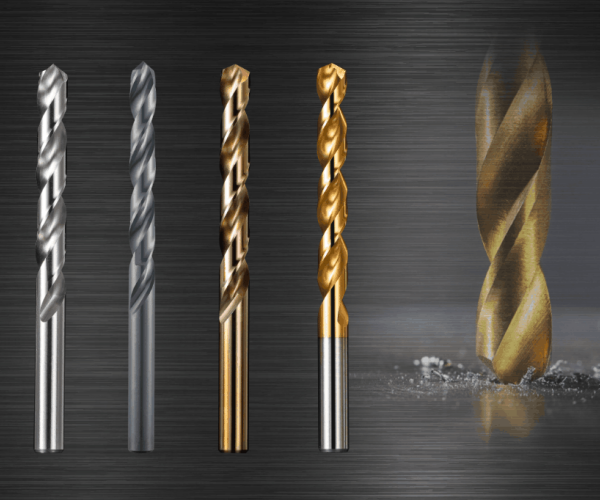
The cutting tool used for drilling is the drill bit, which is used to create holes in workpieces, primarily for making internal threads. Drill bits come in many varieties based on different classifications. According to materials, drill bits can be divided into high-speed steel (HSS) and carbide. Based on applications, they include standard drills, shallow-hole drills, deep-hole drills, center drills, etc.
What are the characteristics of drill bits?
1. Cutting Edge: The two cutting edges of a drill bit are symmetrically positioned, allowing radial forces to cancel each other out, preventing bending in the axial direction.
2. Axial Force: Axial force acts along the axis of the drill bit.
3. Guidance: The drill bit advances under the guidance of the hole being machined.
4. Tool diameter is not very large, enabling high-efficiency machining and effective chip evacuation.
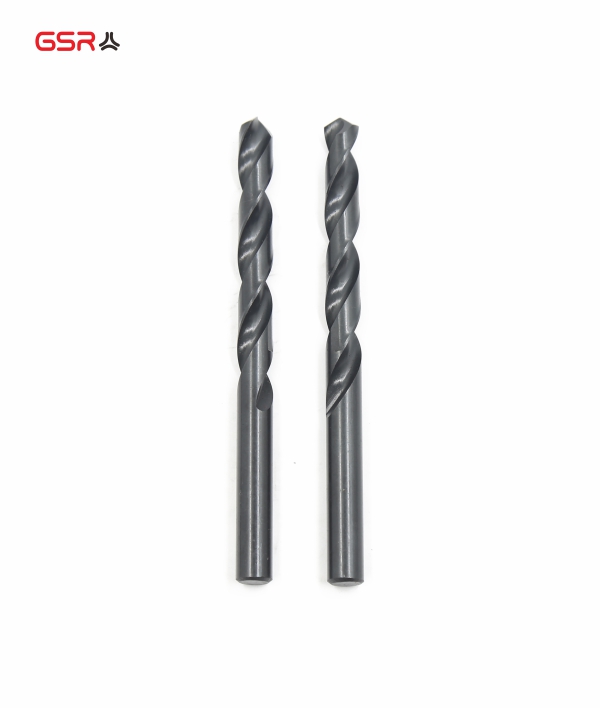
Each part of a drill bit has a different function. Today, we will use a twist drill as an example for illustration.
1. Flute Length: Flute length affects hole accuracy and drill life. It is determined by hole depth and regrinding allowance. Increasing the flute length increases the overall drill length, which reduces the drill's rigidity. A drill with low rigidity experiences strong vibration and chatter when engaging the workpiece, preventing the rotation center from stabilizing. This reduces hole accuracy and shortens tool life. We recommend choosing a drill bit with the shortest possible flute length.
2. Helix Angle: The helix angle is the inclination angle of the spiral flute relative to the drill's axis. At the outer periphery of the drill, the helix angle equals the rake angle.
Typically, the helix angle is about 30°. Angles <30° are called low helix, and angles >30° are called high helix. Low-helix drills have shorter spiral lengths and good chip evacuation, but the rake angle is small, increasing cutting resistance. On the other hand, high-helix drills have a larger rake angle, reducing cutting resistance, but the cutting edge becomes sharper and more prone to chipping and breakage.The optimal helix angle varies depending on the workpiece material.
3. Web Thickness and Web Taper: Web thickness and web taper, together with groove width, determine the cross-sectional shape of the drill.
For example, a very large web thickness increases drill rigidity but reduces groove area, making chip evacuation difficult. At the same time, the axial cutting force increases, affecting the entire drilling process. For HSS drills used on drilling machines, web thickness is 10%–20% of the drill diameter. This percentage is higher for small-diameter drills and decreases as diameter increases. HSS drills have high toughness, so priority is given to chip evacuation. However, for high-speed, high-efficiency carbide drills used on rigid, high-power machining centers, web thickness can be as high as 20%–30% of the diameter. This increases drill rigidity, allowing higher feed rates and finer chip breaking. As web thickness increases, the chisel edge at the tip becomes longer, enlarging the extrusion zone and increasing axial force. To reduce axial force, chisel edge thinning is performed to shorten the chisel edge.
Web taper is used for HSS drills or deep-hole drills with thinner web thicknesses to improve drill rigidity. Generally, the taper is within 2mm per 100mm of drill diameter. Excessive taper makes chip evacuation difficult.
Web thickness and web taper are determined by the drill material and workpiece material.
4. Point Angle: The point angle affects chip thickness. As shown below, with a constant feed rate *f*, a smaller point angle results in a thinner vertical cutting amount *h* per cutting edge, while a larger point angle results in a thicker cutting amount h', increasing chip thickness. To prevent chips from wrapping around the drill bit, increase the point angle to promote chip breaking, solving the wrapping issue.
5. Margin Width: The margin provides guidance and generates friction. A margin width of approximately 6%–10% of the drill diameter is generally appropriate. Long drills used for deep-hole machining have a longer friction length with the hole wall, so the margin width is smaller to reduce friction. Some drills designed to improve hole roundness and surface finish have a larger margin width to enhance the burnishing effect.
6. Reverse Taper (Back Taper): To reduce friction between the hole wall and the drill's outer periphery during machining, a reverse taper is provided on the drill's outer diameter. Reverse taper is sometimes expressed as an angle, but generally, as shown below, it is expressed as the amount of diameter reduction per 100mm of flute length. When machining soft materials like aluminum or difficult-to-cut materials like stainless steel, the resulting hole diameter tends to be smaller than the drill diameter. Increasing the reverse taper can effectively prevent torque rise. If the reverse taper is too small, hole shrinkage can bind the drill, leading to breakage. However, excessive reverse taper reduces guidance and can cause hole deviation. The reverse taper must be set within an appropriate range based on the drill material and workpiece material.
7. Rake Angle: The rake angle (axial) of a drill bit is related to the helix angle; the larger the helix angle, the larger the rake angle. The actual rake angle is also affected by the position on the cutting edge. At the outer periphery of the drill, the helix angle equals the rake angle. The rake angle θ2 (helix angle) at the outer periphery of the cutting edge can be calculated using the following formula.
8. Relief Angle: A relief angle is provided on the flank face to avoid interfering with the drill's feed motion. As shown below, for every full rotation of the drill, the cutting edge advances axially by the feed rate *f*. If the relief angle is less than or equal to the angle θ1 formed by the drill's outermost periphery and the feed rate, the flank face will contact the workpiece, causing axial force to rise sharply. Therefore, the minimum relief angle must be greater than the value obtained from the formula below. The relief angle is generally set between 7° and 15°. Increasing the relief angle reduces the contact area between the workpiece and the flank face, lowering axial force, but it also increases the risk of chipping and breakage.
9. Back-off Depth: Back-off is a clearance of 0.2–0.5mm provided to prevent friction between the drill and the workpiece. Back-off depth is designed to control torque rise caused by increased margin width as the margin wears. It also helps concentrate coolant flow at the cutting tip. For small-diameter drills, back-off depth is closely related to drill rigidity and therefore significantly impacts tool life.
10. Groove Width Ratio: The groove width of a drill is determined by carefully considering both drill strength and chip handling capability. Its balance is expressed as the groove width ratio, which is the ratio of the web width θ1 at the drill tip to the groove width θ2. The groove width ratio is typically 1 to 1.2. Drills that prioritize chip evacuation have a larger groove width ratio, while those that prioritize rigidity have a smaller groove width ratio.
Previous: Fine vs Coarse Threads