




external thread accuracy 6g 6h 6e
Anyone involved in machining, procurement or equipment maintenance has surely faced this dilemma:
Although they are all external threads, the designations 6g, 6h and 6e differ by just a single letter, yet their price, precision and compatibility vary vastly. Choosing the right one, and assembly will be smooth, secure and durable, whilst keeping costs under control; choose the wrong one, and you'll either struggle to fit it—with stripped threads or a jammed screw—or the fit will be too loose, leading to loosening and potentially compromising the safety of the entire product, not to mention the cost of rework.
First things first: what's the difference between the 6G, 6H and 6E?
First, let’s clarify a key point: the ‘6’ in 6g, 6h and 6e refers to the thread tolerance class (medium precision), which is also the most commonly used precision grade in everyday applications (Grade 4 precision is costly, whilst Grade 8 is too coarse; Grade 6 is sufficient for 80% of operating conditions).g, h and e are basic deviations that determine the ‘thread pitch deviation’, i.e. the clearance between external and internal threads (such as nuts, typically 6H) when they are fitted together. A simple analogy: think of the external thread as a ‘screw shaft’; 6h is the ‘standard size’, 6g is a ‘slightly slimmer size’, and 6e is an ‘even slimmer size’—the slimmer the size, the greater the clearance between it and the internal thread (nut).
Key selection criteria: 3 simple steps to avoid pitfalls
Don't get bogged down by tolerance values. Just remember: ‘First, consider the surface finish; second, the fit requirements; and finally, the operating conditions.’ With these three steps, you can achieve a precise match—even beginners can apply this method straight away.
Step 1: Check the surface finish
Surface treatments (such as galvanising, oxidation and hot-dip galvanising) increase the outer diameter of the thread; if no clearance is allowed for, the thread will become ‘coarser’ after treatment, making it impossible to fit a nut.
No surface treatment (natural/blacking finish): select 6h. No additional coating; thread dimensions comply with standards; precise fit; balances strength; suitable for standard carbon steel and stainless steel screws with a natural finish.
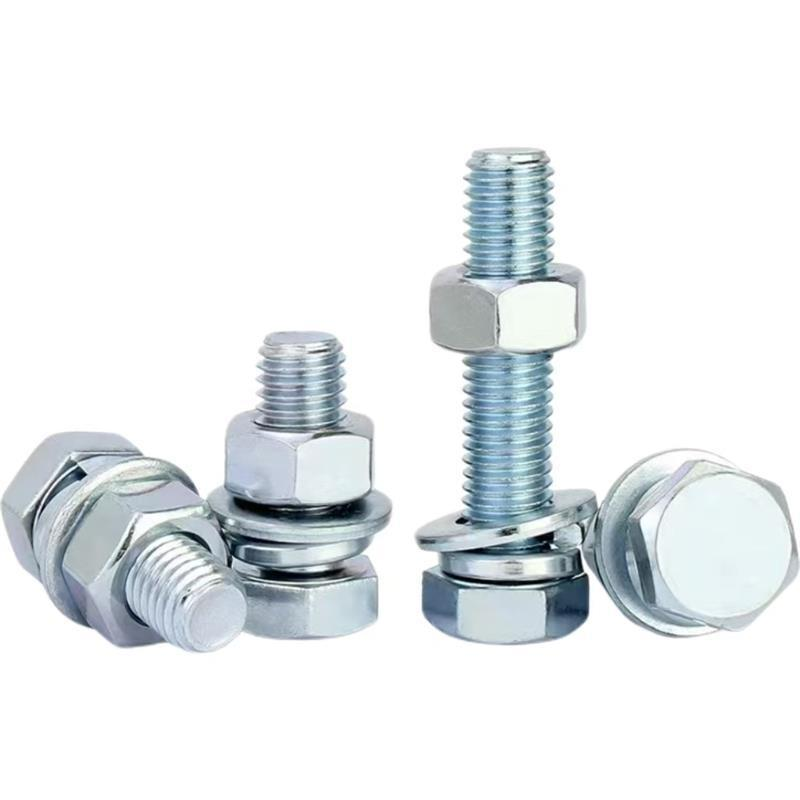
Thin coatings (electroplating, oxidation, thickness ≤ 8 µm): select 6g. The clearance of the 6g plug gauge is just sufficient to accommodate thin coatings; after treatment, the thread dimensions remain within tolerance, and inspection can be carried out using a 6g plug gauge, making this the most common choice.
Thick coating (hot-dip galvanised, thickness 30–80 µm): select 6e. A thick coating significantly increases the thread dimensions; the larger clearance provided by 6e allows for sufficient allowance, preventing the thread from seizing after coating. This is commonly used for outdoor engineering components and in applications requiring high corrosion resistance.
Step 2: Consider the fit requirements (tightness, precision)
Precision fits and high-strength connections (e.g. equipment spindles, sealed joints): select 6h. This provides a tight fit and good alignment, reducing vibration and wobble. It is suitable for applications requiring a long engagement length (Group L) and must be used in conjunction with 6H internal threads.
Standard general-purpose use with high assembly tolerance (e.g. standard bolts, everyday fastening): select 6g. With a moderate clearance that ensures a secure fit whilst preventing assembly failures due to machining errors, this is the ‘go-to option’ in the mechanical engineering industry, suitable for medium thread engagement lengths (Group N, not marked by default).
Interference fit, frequent disassembly (e.g. maintenance screws, connections in thin-walled components): select 6e. With a larger clearance, it facilitates disassembly and prevents thread seizing, making it suitable for short engagement lengths (Group S), thin-walled components and low-strength base materials (e.g. aluminium alloy).
Step 3: Consider the operating conditions (environment, load)
Standard operating conditions (dry indoor environments, general machinery, fixed connections): 6g is the preferred option, balancing compatibility and cost
Harsh operating conditions (outdoor, damp, vibration, high temperatures): Choose the 6e wide-clearance option to prevent seizing caused by dust and corrosion, and to accommodate thermal expansion; suitable for heavy-duty structures and outdoor equipment.
Precision instruments, aerospace (high precision, light loads): select 6H. This grade offers high precision and good neutrality, meeting the fit requirements of precision equipment. Note that it should be paired with precision-grade internal threads (such as 4H or 5H).
Scenario-by-scenario reference: Simply match the entry (save for future reference). We’ve compiled a detailed reference table based on everyday scenarios, so you can look things up straight away without having to think:
Standard carbon steel bolts (uncoated, used for securing furniture and equipment) >6h
Galvanised screws (electroplated, used for outdoor fencing and household appliances) >6g
Hot-dip galvanised bolts (used for bridges and outdoor engineering) >6e
Precision equipment screws (uncoated, for instruments, spindles) >6h
Maintenance screws subject to frequent removal (e.g. equipment covers, access panels) >6e
Thin-walled component connections (e.g. sheet metal, plastic parts) >6e (to prevent seizing and deformation)
Standard mechanical connections (medium engagement length, default scenarios) >6g (preferred)
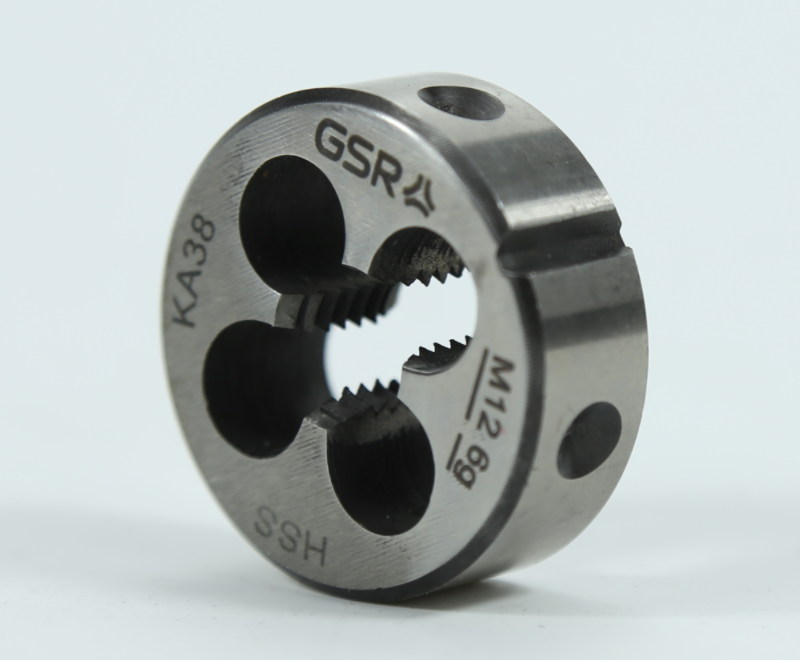
For external threads cutting with 6g tolerance, welcome your inquiry, our round dies will meet your machining accuracy requirements