




How to Cut a Clean External Thread by Hand with a Threading Die
Cutting an external thread by hand with a die requires more than just the right tool. Careful preparation is equally important. The key factors: correct workpiece diameter, a clean chamfer, a straight start, and sufficient lubrication. These are where most mistakes happen – and where it’s decided whether your thread turns out clean or crooked from the beginning.
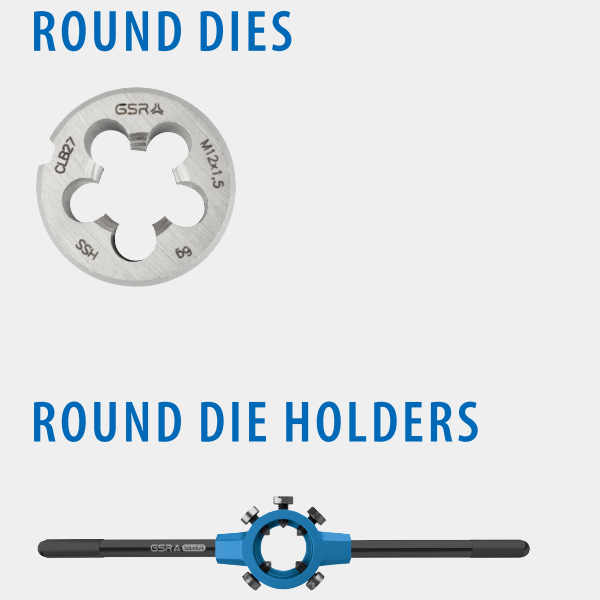
When people talk about “thread cutting,” the term “thread cutter” is often used loosely. But technically, for external threads, the tool is called a die. It can create new threads, rework existing ones, or repair damaged threads.
So, to produce a clean metric external thread, don’t focus only on the cutting step. Choose the right die, prepare the workpiece properly, and cut in a controlled way. Only then will you get a thread that screws together smoothly.
Which Die Should You Use for External Threads?
Before cutting, know the diameter and pitch. Even a small deviation – especially for fine threads – can make the die unfit for the job.
· Round dies are standard for cutting new external threads.
· Hex dies are often more practical for reworking or repairing existing threads.
Die material matters too:
· HSS works for most materials.
· For harder materials or stainless steel, HSSE (cobalt) dies handle higher loads and offer better wear resistance.
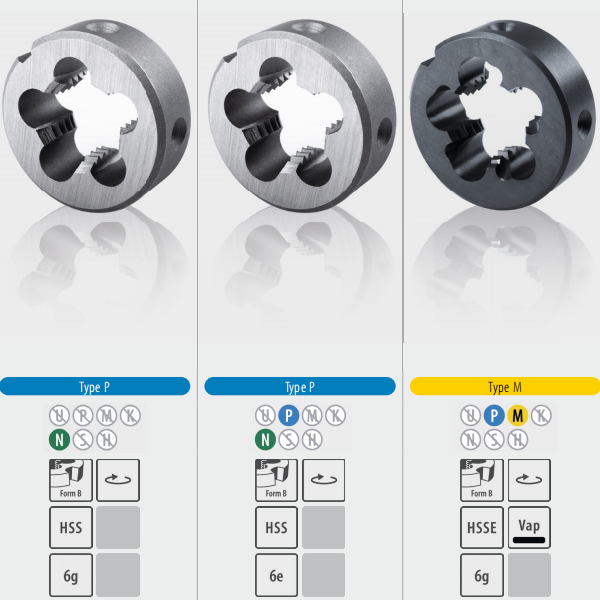
Dies with a taper lead start more easily, cut with less effort, and produce cleaner threads – a noticeable difference when working by hand.
For demanding applications, a surface treatment like vaporizing improves sliding properties and smoother cutting.
Bottom line: Always match the die to your material and application.
Which Cutting Oil Should You Use?
Cutting oil reduces friction, lowers heat, and helps remove chips. Result: smoother cuts and less tool stress.
Which oil is suitable? It depends on material and application:
· Standard cutting oil works for many materials.
· For tougher materials or difficult positions, cutting pastes or gels are better – they stick to the cutting edges.
Important: Use enough lubricant. Cutting dry leads to rapid wear, poor thread quality, and unnecessarily high cutting forces.
Step-by-Step Guide for Clean Results
1. Define the Thread & Choose the Die
Determine diameter and pitch clearly. For metric threads, distinguish coarse from fine threads. Then select the correct die.
2. Prepare the Workpiece
· Use the correct workpiece diameter. Too large = high friction + harder turning.
· Chamfer the end – this makes starting easier and ensures clean engagement.
3. Position the Die Correctly
Place the die at a right angle to the workpiece axis. The first turns decide the entire thread path. A crooked start means a crooked thread.
4. Cut Evenly and Smoothly
Guide the die steadily and evenly. Use sufficient cutting oil. Don’t force it – controlled movement is key.
5. Clean and Check
After cutting, clean the thread and test it with its mating part. It should screw together smoothly.
What If the Thread Cuts Crooked or Jams?
Almost always due to starting position or preparation. Common causes:
· Missing chamfer
· Wrong workpiece diameter
· Die started at an angle
The rule: As soon as you see the die engaging crooked, stop and restart. Don’t try to “fix it by going further” – it won’t work.
What If the Die Breaks?
Stop immediately. The cause is usually excessive load, not the tool itself. Typical reasons:
· Lack of cutting oil
· Too much cutting force
· Unfavorable cutting conditions
· Wrong tool material
· Oversized workpiece or crooked start
Clean everything, find the cause, then restart. For tough materials, also re-evaluate your die choice.
Controlled Cutting = Clean Results
A smooth, even cut keeps the die properly guided and forms an accurate thread profile. Combined with enough lubricant and a well-prepared workpiece, you get better surfaces, less tool stress, and a smooth-running thread.
Control reduces rough cutting, wear, and avoidable errors.
Repairing & Reworking External Threads
A damaged external thread can often be reworked if the basic thread form is still present. The process cleans off burrs and minor damage, restoring function.
But if the thread is severely deformed or missing sections, reworking won’t help – replacement is the better solution.
Typical Mistakes (And How to Avoid Them)
Most problems come from the same recurring errors:
· Wrong die for the job
· Incorrect workpiece diameter
· No chamfer or too small a chamfer
· Crooked start
· Too little cutting oil
· Uneven or uncontrolled cutting
· Too much force, too little control
Keep these in mind, and you can cut external threads yourself – avoiding problems from the start.
FAQ
Q: Can I cut an external thread myself?
Yes – with the correct die, proper preparation (correct diameter, chamfer, straight start), and enough cutting oil.
Q: Which die should I use?
It depends on diameter, pitch, and material. Round dies for new threads; hex dies for rework or repair.
Q: Which cutting oil is best?
Standard oil works for most materials. For tougher materials or difficult positions, use cutting paste or gel – they adhere better.
Q: Why does my thread cut crooked?
Usually because the die didn’t start straight. Common causes: missing chamfer, wrong diameter, or too much pressure at the start.
Q: Can a damaged external thread be repaired?
Yes – if the basic thread shape is still there. Minor damage can be cleaned up. Severe damage usually means replacement is better.
Conclusion
Cutting a clean external thread with a die comes down to careful preparation and controlled cutting. The right die, correct workpiece diameter, enough cutting oil, and a straight start determine whether your thread is perfect or needs rework.
Follow these points – you can produce, rework, and often repair external threads. The real secret: not force, but clean and controlled work.
For product inquiry, please visit us at www.gsrthreads.com
Previous: None